Wednesday, May 05, 2010

A Nightmare on Elm Street (2010)

Cast: Jackie Earle Haley (Freddy Krueger), Kyle Gallner (Quentin O' Grady), Rooney Mara (Nancy Holbrook), Katie Cassidy (Kris Fowles)

Director: Samuel Bayer


Genre: Horror/ Fantasy


When I first got the idea to make this blog 5 years ago, I made it a point NOT to include new releases. I wanted to stick to films long since out and already criticized or praised to death. The only excuse I can come up with for writing a post on this "reimagining" of the 1984 Wes Craven film A Nightmare on Elm Street is basically my own nostalgia.


Living with older brothers who enjoyed these films back in the 80's ended up making the lead monster of the film series (8 films in all, not counting this remake), Freddy Krueger, somewhat of my own personal boogey-man. I can honestly say I was never an Elm Street fan, and probably never will be.

The film was advertised as a “reimagining” of the original. Red flags of disaster immediately went up when I heard that. The whole idea of taking a story that, even I'll admit, is rather creative, and basically changing important elements around is just not a fair thing to do. It's like taking a story handed down through generations and reinventing it just because it's old. New audiences will miss out on the original. Reinventing the wheel is just futile.

Hollywood has already brought back monster killers such as Jason Voorhees and Michael Myers for new versions of original horror flicks- Friday the 13th and Halloween. It's no surprise that Freddy Krueger was next on the list.

Wes Craven, the original writer and director of the Nightmare series, didn't direct this one. The job went to Samuel Bayer. Who can blame Wes Craven?

First, Freddy himself was portrayed by a completely different actor- Jackie Earle Haley. I clearly remember Haley as the young, punk-mouthed "Kelly Leak" from The Bad News Bears (1976). Now he's portraying Freddy Krueger! Who would have imagined? Robert Englund had portrayed Krueger in all previous films from part 1 to part 6 as well as in Wes Craven's New Nightmare and Hollywood's desperate search for more money in the 2003 flop Freddy Vs. Jason.

The make-up was rather impressive, giving Freddy a more natural burn victim look as opposed to the classic ohhh, that's creepy look of the original Freddy. Still, Haley pitched in his own deep, guttural voice that was much more audible than the other actors despite his low pitch. The voice was too cliché but, then again, what else can you do with Freddy’s voice? On top of that, they decided to throw in some original catch-phrases from the '84 Nightmare for nostalgia, I suppose. I couldn't help roll my eyes whenever they did that. Luckily, it wasn't overdone.

In this new Nightmare, a select group of teens in the town of Springwood are plagued with reoccurring dreams of a horribly disfigured man sporting a red and green sweater, a dirty brown hat, and a glove with razor sharp knives. After random teens are mysteriously dying one by one, two kids, Nancy Holbrook and Quentin O' Grady, discover that the man haunting their dreams was in fact a gardener named Freddy Krueger who worked at the preschool all the teens had attended in their childhood.

As Nancy and Quentin try to find new ways to stay awake while educating themselves on the effects of insomnia and sleep deprivation, Nancy learns that Freddy had secretly abused the children in the preschool and was particularly fond of her. Her memory of such abuse slowly returns to her as she discovers more about Krueger. Their parents had previously discovered what Freddy had done to their children and that he had told his child victims to keep quiet. They had taken justice upon themselves by chasing Freddy down, trapping him in an abandoned boiler room and setting it ablaze.

Unlike the original Nightmare in which Freddy seeks revenge on the parents who murdered him by attacking their children in a place they can't reach him -their dreams- Freddy seeks revenge on the children themselves as they had told the truth about the abuse he was inflicting on them. Basically, Freddy blames the children for his death and not so much the parents.

The "jump scenes" were way too obvious. Then again this did have a touch of classic horror movie element, especially reflecting the original movie. Some of the special effects look much to fake and clearly computerized. They could have done a better job!

Freddy's makeup was well done but that's not to say the evil face of Englund's Freddy does not lose any of that fear which can still haunt us in our dreams.

I did like how Haley made Freddy much more serious with clearly one major chip on his shoulder. This is opposed to Englund's more sadistic humor he would incorporate into Freddy's taunting of his innocent victims as though he was really in it for the kicks.

The movie did flow well, as best a movie like this can flow. It didn’t drag on. Still, rewriting a story is just an unfair thing to do to audiences. It's confusing and not really necessary.

As Hollywood has submerged audiences into the trend of remaking movies, they could have at least done just that without rewriting the back story. Overall, the movie was disappointing and a lame rehatching of a horror classic that isn't that old. Freddy died in the 6th movie Freddy's Dead; The Final Nightmare and he needs to stay dead- not reimagined! Please, no sequels!

Thursday, April 15, 2010

About Schmidt (2002)

Cast:  Jack Nicholson (Warren Schmidt), Kathy Bates (Roberta Hertzel), Hope Davis (Jeannie Schmidt), Dermot Mulroney (Randell Hertzel), Howard Hesseman (Larry Hertzel)

Director: Alexander Payne

Genre: Drama/ Comedy


Loneliness is a genuine problem that can plague the most unexpected of people. Quite often, the most unlikely of subjects can suffer from it. Charles Chaplin is the first person to come to mind. It gnawed at him terribly. *Isaac Newton, Abraham Lincoln, Beethoven, and even Brooke Shields all wafted through the realm of loneliness. Winston Churchill called his loneliness, "black dog."

Perhaps the worst part about loneliness is that often times, no one else can tell. It's like being forced to have unnecessary surgery. You don't want it to happen. When you wake up, you don't know what you just went through and something important feels missing. You're the same after. All there is, is a hole with stinging cold air pushing through. And there's nothing you can do about it.

No one could tell of Warren Schmidt's utter loneliness in this movie. It was a very relatable essence of the film.

Jack Nicholson's character was absolutely impressive. It was such a different role for him that I must applaude his successful attempt at doing something not on the same basis as his other roles such as Jack Torrance from The Shining, the Joker from Batman, Col. Nathan R. Jessep from A Few Good Men, and J.J. Gittes from Chinatown. He captured a completely human element so well!

Based on the book About Schmidt by Louis Begley, Warren Schmidt has just entered the world of retirement after working for an insurance company for many years. He takes up the latent life with his unfulfilling marriage and the disappointment that his only daughter is about to marry a guy named Randell- a waterbed salesman who comes up as nothing short of a complete dud whom Warren deems unworthy of his daughter. All in all, he begins his retired life just as dependent on his wife, Helen, as he always was- with some unwillingness to be dependent.

Retired life turns bad on innocent Warren after Helen suddenly dies of a cerebral blood clot. When the smoke has cleared from the funeral, Warren becomes completely aimless inside the walls of his life. And, sadly, the only person willing to listen to Warren is a young child named Ndugu in Tanzania whom Warren chose to sponsor through a charitable organization advertized on television.

After discovering that his best friend had a short lived romantic involvement with Helen years before, he tries to separate himself from his emotional attachment to his wife by taking a road trip in a camper he had bought for a retirement trip he and Helen had planned. He packs up for Denver in order to spend time with his daughter and help with the wedding arrangments. His daughter declines the offer and Warren decides to just take his time on the road and visit places important to him, before arriving in Denver. All the while, he keeps writing to young Ndugu, sharing his thoughts, troubles, happiness, and sorrows. He shares his experiences in sorrow in loosing Helen, his disagreement towards his daughter’s engagement, his lack of enthusiasm in meeting his future son-in-law’s family in Denver, and all the interesting things he witnesses on the road.

This movie was, hands down, one of the most realistic touching films I have ever seen. I think Nicholson was supreme for the role. Warren does his best to touch those around him, but those around him only look at Warren and see what their expectations allow.

Kathy Bates's supporting performance brought some comic relief to the picture. The bluntness in her character was a perfect, complimenting contrast to the silent, melancholic demeanor of Warren. Some of her topics for conversation were rather on the cautious side, such as in the scene where she abruptly discusses with Warren the love life between her son and his daughter.

One problem I had with the movie was the scene with Warren soaking in a hot tub after sleeping on one of the Hertzel’s water beds causes his back to go out. When Roberta Hertzel (Kathy Bates) decides to join him, she removes her bathrobe nonchalantly, wearing nothing underneath. It was certainly an emphasis to the uncomfortable element of the scene, but was really unnecessary.

The ending scene wasn’t too overdone as I expected it would be. The movie offers much to its audience. I sure hope this is a film that Nicholson will be remembered for in years to come.

Often times, actors and actresses end up playing the same type of roles. When they try a different act, it doesn’t always work so well. Not so with Nicholson here. He is a rare actor who pulled it off!

(I particularly liked film critic Roger Ebert's review of About Schmidt for the Chicago Sun Times. You can read it here by clicking on the follow link: About Schmidt- Roger Ebert)


*http://www.butler.org/body.cfm?id=278
** Click on link

Friday, April 09, 2010

Howard the Duck (1986)

Cast: Lea Thompson (Beverly Switzler), Jeffery Jones (Dr. Walter Jenning), Tim Robbins (Phil Blumbertt), Ed Gale (Howard T. Duck), Chip Zien (Voice of Howard T. Duck)

Director: Willard Huyck

Genre: Science fiction/ Comedy


This movie had quite a bit of involvement. It also has to be the biggest blush for executive producer, George Lucas. Whether it’s just as bad as his Ewok Adventures is debatable.

Howard was based off of a comic book, created in the 1970’s by Steve Gerber and Val Mayerik for Marvel Comics. The comic featured a personified, irritable duck named Howard from “Duckworld” who's trapped on earth after science experiment on earth dragged him from his home planet.

I’m sure the reader see’s where this is going.

The movie takes it from there. After Howard lands on earth, he discovers he is in a strange place called Cleveland. Surprisingly, Cleveland is very similar to his own world. Howard is befriended by Beverly, the lead singer for a girl rock band, the Cherry Bombs. To try and find out how Howard ended up in Cleveland and how he can get back home, Beverly takes him to her friend Phil who works in a natural history museum.

As Phil consults with his superiors, Howard does his best to fit into human society despite his short, feathered, and duck billed appearance.

All the while, the same experiment that inadvertently dragged Howard
from Duckworld, also inadvertently dragged dark overlords of the universe to earth. One of those overlords has taken residence inside the body of Phil’s superior scientist, Dr. Jenning. The possessed Jenning ends up kidnapping Beverly so the other overlords can have a body to inhabit when he brings them to earth. This fiasco occurs after a strange tirade the alien-possessed Jenning has in a truck stop diner. Howard and Phil must now save Beverly and prevent the overlords from entering the atmosphere.

The movie hit the fan right at the start with its ridiculous and poor attempt at a philosophical, perhaps theological, opening narrative. It was just plain terrible. It didn't fit at all with the picture.

The duck costume wasn't too bad. Its motions and realism were alright. Some of the jokes were amusing but that wasn’t enough to save this film. Niether was throwing in such stars as Jeffrey Jones (Amadeus), Lea Thompson (Back to the Future I, II, III), and Tim Robbins (Shawshank Redemption).That still didn't redeem this picture.

I can’t even say, despite the large number of people who worked on this movie and the amount of money that went into it, that it was a good effort. There was no effort. I wonder if the producers needed a hit and had to come up with something fast. The story reminds me of something a college student would haphazardly pen out as an assignment on the night before its due. The idea should have stayed on the pages of the comic books. Some story ideas just are not meant to be and this film was no exception.

The middle of the movie just got desperate for more involvement. The movie started off ridiculous and it didn’t get any better as the story moved along.  The scene with Beverly coming onto Howard was especially disturbing and rather bold, I must say! It totally destroys what little human emotion the movie had to begin with while trying to appeal to the most debase humor a person can have.

Howard the Duck has been left to the enjoyment of 80’s “geeky flicks” fans. It has come, but it hasn’t really gone away completely. I’m sure George Lucas wishes it would.

Friday, March 26, 2010

Modern Times (1936)

Cast: Charles Chaplin- as Charlie Chaplin (A Factory Worker), Paulette Goddard (A Gamin), Henry Bergman (Cafe Proprietor)


Director: Charles Chaplin

Genre: Comedy, Drama


The machines get us in and the machines get us out! ~Myself


They say that with the way the modern world is, they don't make saints like they used to- if they make saints at all anymore. Charlie Chaplin was no saint. Still, they don't make movie producers in Hollywood like they used to.


Modern Times was written, directed, produced, and scored by Chaplin. Not only is it one of the greatest social criticisms ever made (ranking right up there with such outstanding timely films as the Marx Brother's Duck Soup and Stanley Kubrick's Dr. Strangelove; Or, How I Learned to Stop Worrying and Love the Bomb), this was also Chaplin's staunch stand against the advent of sound motion pictures, or "talkies". This film was released roughly nine years after "talkies" had come onto the scene. Chaplin considered sound in movies to be a mere fad and thought it would leave just as soon as it came. He gave credit to the intelligence of audiences and knew that people's imaginations were much more active watching silent movies than they were during sound movies.

He also thought that acting in silent movies was much more of an art because the actors were forced to convey dialogue through body language and mannerisms. Actors in talkies just had to blurt out their memorized lines.

The huge success following the release of Modern Times confirmed these ideas in his head. He brilliantly- I do not use that term loosely here- was outspoken in his opinions about talkies versus silents. This movie is more semi-silent than completely silent. There are a few lines of dialogue but each line is spoken by means of some form of mechanical device or another- i.e. a radio, a television monitor, a recording. It goes to show just how artificial, unfitting, and too mechanical Chaplin thought talking was in movies. He makes such a claim in his book My Autobiography.

Chaplin's actual voice is heard as he has a song, entirely in gibberish, towards the end of the movie.

Chaplin plays his usual "tramp" character that is stuck in the grind of daily technology. The industrial revolution has left its greasy fingerprints all over working class America. And the great depression is looming like an unmerciful villian.

Chaplin, the factory worker, is over worked and ends up having a complete breakdown. After losing his job at the factory, he does his best to find gainful employment, but he has the bad luck of always finding himself in misunderstood trouble. He even ends up in jail after being mistaken for the leader of a communist protest. Meanwhile, he happens to run into a homeless girl (Paulette Goddard- his wife at the time), who is running from social workers trying to place her in adoptive care. As the two befriend each other, they make their way through the competitive streets that are aching with depression, in search of a better life where the ever watching eye of "big brother" catches up with the both of them.

It took Chaplin three years to complete this movie. His demand for perfection and obsession to get it “just right” has made his films, especially this one, withstand time.

This was his last silent movie. Afterwards, he went on to make his first “talkie”, The Great Dictator. Chaplin’s “tramp” had met the fate that Chaplin said talking motion pictures would do to “the little fellow.” Talking killed him.

Chaplin had made movies up to the 1960’s but, except for The Great Dictator, they did not feature the famous “little fellow” with his mustache, hat, and cane. He walked down his last road in Modern Times.

~"Charlie Chaplin, King of Tragedy"...

Chaplin began his acting career in English Vaudeville. He made his first film when he joined Mack Sennett's Keystone Film Company for $150 a week. He played a swindler in his first movie short, Making a Living. In in second film, Kid Auto Races at Venice, he appeared as the " little tramp" that has since become internationally iconic.

After his contract with Keystone was up, he moved to Essanay Company where he produced 12-reel films. He worked under Essanay until 1917 when he became independant and built his own studios on La Brea Avenue in Hollywood. He made his own movies and eventually partnered up with movie giants Douglas Fairbanks, Mary Pickford (America's sweetheart), and D.W. Griffith- the grand-daddy of the modern motion picture. Together, the four of them started United Artists, which according to *The History of Movies by B.B. Hampton,

"The corporation was organized as a distributor, each of the artists retaining entire control of his or her respective producing activities, delivering to United Artists the completed pictures for distribution on the same general plan they would have followed with a distributing organization which they did not own. The stock of United Artists was divided equally among the founders. This arrangement introduced a new method into the industry. Heretofore, producers and distributors had been the employers, paying salaries and sometimes a share of the profits to the stars. Under the United Artists system, the stars became their own employers. They had to do their own financing, but they received the producer profits that had formerly gone to their employers and each received his share of the profits of the distributing organization.”

At the start of UA, Chaplin was still under contract with First National. In order to fulfill his contract for on more picture, Chaplin filmed his iconic movie The Kid which made Jackie Coogan America's first child movie star. Coogan later became popular for his role as "Uncle Fester" in the early sitcom The Addams Family.

While under UA, Chaplin made his most famous and recognized films such as The Gold Rush, City Lights, and Modern Times.


Like many other celebrities of his time, Chaplin was accused of being a communist by Sen. Joseph McCarthey, who had produced a file on Chaplin linking him to subversive political activities as far back as 1922.


During a trip to Europe, Chaplin was informed by the U.S Government that he would not be allowed to return. He spent his last years in Switzerland, where he wrote his book My Autobiography in 1964 and made his last film, A Countess from Hong Kong, in 1967.

His 1957 film, A King in New York, was a blatent criticism of McCarthyism and American social life. After entertaining America through two world wars and into "modern times" only to be called a "communist" and then get kicked out, his bitterness was certainly understandable.

In 1972, he was allowed back into the United States to be honored with an Oscar Award for his film genious. He died in 1977.

Aside from A King in New York, other movies he made without his famous"tramp" character include Monsieur Verdoux (1947) and Limelight (1952) in which he co-starred with another silent film legend, Buster Keaton.


*http://www.charliechaplin.com


Thursday, March 25, 2010

Throw Momma from the Train (1987)


Cast: Billy Crystal (Larry), Danny DeVito (Owen), Anne Ramsey (Momma), Kate Mulgrew (Margaret), Kim Greist (Beth)

Director: Danny DeVito

Genre: Comedy/ Crime


This movie was quite the comedy in its day. It had Billy Cyrstal and Danny DeVito when they were both at the high point of their acting careers. It was also the last of the better movies for the late, great Anne Ramsey who died on my birthday (August 11) in 1988. Ramsey is most famous for both this role and her role as Mama Fratelli in The Goonies. She made a good mama, apparently.

In this picture, Larry (Billy Crystal) is a creative writing teacher who happens to be suffering from severe writer’s block. He is also peeved to the brim as his ex-wife has stolen a story idea of his and turned it into a best seller. While trying to foster another relationship, he is much too stressed with writer’s block and infuriated with his ex-wife.

Meanwhile, Larry’s student Hank (Danny DeVito) is still living with his momma. Momma is more than loving, she is downright domineering and extremely critical of her son. Hank is constantly getting ideas of how to do his mother in. He just can't get himself to do it, though.

As Hank closely observes the problems of his creative writing teacher, he decides that the two should make a pact. If he kills Larry’s ex-wife, then Larry should kill his momma. It is the perfect story line for any mystery novel. Hank is all for it and presents his idea to Larry who misunderstands. Nevertheless, Larry does the deed for Hank and now Hank is in fear of the police thinking he did it.

This was an enjoyable film. It was neat watching Crystal and DeVito play off of each other in a film where they were both still very popular. You don’t really see them much in movies anymore. Still, this movie does have an element of timeliness to it. It did have some minor sexual content, otherwise, it is very entertaining.

Monday, March 22, 2010

The Witches (1990)

Cast: Jasen Fisher (Luke Eveshim), Mai Zetterling (Helga Eveshim), Anjelica Huston (Eva Ernst- the "Grand High witch"), Rowan Atkinson (Mr. Stringer)

Director: Nicolas Roag

Genre: Family/ Fantasy

In the list of movies adopted from the books of Roald Dahl, this one has sadly fallen into the seldom remembered or completely forgotten list. It was a good movie and played out very well. Dahl's most famous book and film adaptation so far is Charlie and the Chocolate Factory. There have been other movies based on Dahl's books- James and the Giant Peach, Matilda, and the recently released stop-motion animation movie Fantastic Mr. Fox. But who remembers The Witches?

This was a popular movie when I was a kid. I find it hard to understand why this film has been lost, in a manner of speaking, when it had a fine cast of talented actors and actresses including the gorgeous Anjelica Huston and also British comic actor Rowan Atkinson (Mr. Bean). It also had the classic and always entertaining make-up and creature special effects of Jim Henson, who also was the executive producer.

The story line involving witches is very original. Instead of the generic green skin-toned wicked witch with a black pointy hat and broomstick, the witches in the film- as based on Dahl's book- are much more inconspicuous. They look and act like everyone else. Unless you know the distinct subtle features of a witch, you would never know someone was a witch if even they were standing right next to you.

The witches have one ultimate purpose in life- to destroy children. A young boy named Luke learns how to identify witches from his grandmother who claims to have had experiences with them. Of course, Luke is rather skeptical about it all, but soon finds out his grandmother knew precisely what she was talking about. According to his grandmother, witches are well organized. There is a Grand High witch who is head of all witches in the world. Nobody knows who or where the Grand High witch is, except other witches.

After his parents die in an unfortunate accident, Luke ends up living with his grandmother. After a while, she becomes sick with diabetes. To help ease their loss and for the sake of her health, they take a holiday in England and stay at a fancy resort hotel.

There, Luke accidentally stumbles upon the yearly convention of witches being held by the Grand High witch herself. She has concocted a formula design to turn children into mice and has instructed the witches of England to wipe out all children in England without exception. As Luke's presence is discovered, the witches take him and turn him into a mouse.

Despite his now short furry stature, Luke attempts to turn the tables on all the witches with the help of his grandma.

For a kid’s film, I didn't find this terribly silly or ridiculously sappy. It played out well with enough room for audiences to use their imagination- something many movies don't let audiences do these days. The effects were well done and satisfied my expectations of Jim Henson and his creature shop. I honestly think this movie falls right behind Willi Wonka in standard and enjoyment.

For more information on how to identify witches, the writer himself- Roald Dahl- informatively explains the nature and characteristics of real witches. http://www.youtube.com/watch?v=QakMSCAhAOQ

Saturday, March 06, 2010

Being There (1979)


Cast: Peter Sellers (Chance), Shirley MacLaine (Eve Rand), Jack Warden (President 'Bobby'), Melvyn Douglas (Benjamin Turnbull 'Ben' Rand)

Director: Hal Ashby

Genre: Drama/ Comedy


I am willing to bet money that the writers of the movie Forrest Gump (1994) had taken at least some of there ideas from this movie. Tom Hank's character Forrest Gump popped into my head during a few scenes in this movie.

The film is based off of the book of the same name by Jerzy Kosinski. From what I understand, Peter Sellers had read the book, called up Kosinski about turning his story into a movie as he eagerly wanted to play the role of Chance.

The story line is very original and very well thought out. Peter Sellers was very entertaining. His character seemed somewhere in between a Buster Keaton and a Fred Rogers.
Chance is a simple minded gardener for an old man in a well-to-do house in Washington D.C. Oddly, Chance has never once left the house and his only experience and knowledge of the outside world is from television. The old man has passed on and Chance is forced to the streets after the old man's lawyers ask him to leave.

With no place to go and no gardens to care for, Chance wanders the streets looking for a new garden to tend. He gets injured by a limousine and ends up under the care of a very wealthy and influential older business man, Ben, and his wife Eva.

As the couple get to know Chance the gardener, and mistakenly refer to him as "Chauncy Gardner", his constant witless deliverances of T.V. based remarks are mistaken for philosophical profoundness. When the president himself stops to visit Ben, he is introduced to Chance and mistakes his remarks about garden care for deep economic and political insight. The president ends up quoting Chance in a speech which quickly brings Chance into the public eye. His attention suddenly becomes sought after by major news and media outlets. Nobody can find any background information on Chance. While he remains influential, he also becomes quite the national enigma.

But Chance remains completely ignorant of the powerful impact he has on those around him. All he wants to do is watch television and tend to the garden.

In the meantime, Ben is very sick and on his deathbed. Also, his wife is becoming rather fond of Chance and tries to seduce him into an affair. All the while, Chance remains ignorant.

The few instances of the immoral tendencies of the upper class portrayed made it unmistakably obvious just how self-seeking powerful people in the country can be. I don't think this was necessarily part of the story, but it was there.

As I said, the story line was original. The movie moved along nicely- not too fast, not too slow. However, the only entertaining element of the movie was watching Sellers. He fit so well into the part. His childlike expressions aroused a fair amount pity for the character. It was a role unlike any other role he has played in his acting career. But other than Sellers and perhaps the social commentary behind the storyline, the movie just seemed too lacking. Much of the movie was rather bland and distasteful- particularly a scene where Chance is approached by a gay man who mistakes Chance’s ignorance as an acceptance of an "offer." I would put other Sellers movies as Doctor Strangelove or The Pink Panther before Being There. I would call it another one of the movies that I’ve seen once but probably wouldn’t watch again.

Thursday, March 04, 2010

The Assassination of Richard Nixon (2004)


Cast: Sean Penn (Samuel Bicke), Naomi Watts (Marie Anderson Bicke), Don Cheadle (Bonny Simmons), Jack Thompson (Jack Jones)

Director: Niels Mueller

Genre: True crime/ drama/ history


Samuel J. Bicke is a forgotten name- not that it should be remembered in the first place- that has not even been added to the list of such people as John Wilkes Boothe, Lee Harvey Oswald, James Earl Ray, or even John Hinckley, Jr. Whether you’re a Democrat or Republican, or whether you were alive during the Nixon administration and supported Nixon or not, hopefully you're willing to appreciate that this Presidential assassination that never took place. I wonder if Sean Penn would!

I am not a fan of Sean Penn. I just want to make that clear. Still, I am willing to give credit where credit is due. With roles like this, however, I can't help but being skeptical as to why Penn would take on a role like this, knowing what his politics are!

Sam Bicke was a real person. According to the movie, he was a man unsure of himself. It seemed he was accustomed to being told what to do more so than making his own decisions. He was separated from his wife as they were trying to improve their marriage. His boss at an office furniture store would consistently harp on him to improve himself as a sales rep with too much harsh criticism at any Bicke’s flaws. Anytime he wanted someone to hear his problems, it seemed nobody really cared to listen.

He discovered that his wife was seeing someone else despite his best efforts to better their marriage. He made a sincere effort to approach the situation with his wife, but she unexpectedly filed for divorce. This hurt him straight to the core. In the meantime, he got all the more fed up with the harsh criticisms of his boss, who also constantly compared Bicke to his better co-worker. He even demanded Bicke to shave his mustache, which Bicke begrudgingly did. All his stress, depression, and bitterness towards the unfairness of life and society, he narrowed down to President Richard Nixon. To better the treatment of the everyday working man who works hard, and strives to be faithful only to end up shafted unmercilessly, was to take out the one man who had to answer for it- the president.

Bicke snapped. He came up with a plan to assassinate the president. The plan was to hijack a plane and crash into the White House. It seemed easy to Bicke at first, but it didn’t quite end up that way.

This film was certainly a depressing one. Penn generally played the role well, making the audience sympathize with Bicke's pain while seeing the harshness and violence that can result in untreated depression.

The movie was very informative, but seemed to move through the events a little too quickly. It was more like a “show & tell” rather than something historic. There was room for improvement. It didn't go into too much detail with his frustrations over Nixon, but just enough to have the title make sense. In the long run, it just seemed to be another of Penn's lame political commentaries on an era the liberals such as Penn himself cannot seem to take their heads out of.

Thursday, February 25, 2010

Les Triplettes de Belleville (2003)


Director: Sylvain Chomet

Genre: Foreign/ Animation/ Comedy/ Musical


The French seem to try and try again to be different from everyone else. I really believe they strive for uniqueness. Well, who doesn’t? Still, they have a way to be unique-er than anyone else. I will say they do a great job with their cooking, and their wines, but aside from that and this film, I can't think of other examples.
When French people produce something that pokes fun at themselves, it just brings a smile to my face. That’s like Confucius telling his followers, “nahh…I was just ‘B.S.-ing.” Even then, and this film is the only time I have ever seen it done, they just out do anyone else who makes fun of them (except for Monty Python-nobody beats them in French mockery!)

This movie wasn't terribly strange. It was, in fact, entertaining. The dialogue was completely in the details of the animation.

Madame Souza is concerned about her troubled grandson, Champion. She tries to soothe his aching with a puppy which doesn't help. She also introduces him to the piano, but his melancholy doesn't quite dissolve- especially after he hears his grandma sing. It finally clicks with Souza what her grandson yearns for. She gives him a tricycle, which instills in him a love of cycling. He becomes happy instantaneously. This dedication lasts all the way to the Tour de France.

As Champion races in the Tour de France, the French mafia kidnaps him and two other cyclists. Madame Souza finds clues indicating that he's been kidnapped and taken to Belleville, but she doesn’t know who took him. She crosses the sea to search for her grandson. As she spent her last 10 francs on a paddle boat to chase the ship with her grandson on it across the waters, she lands in Belleville, broke and alone. Three old former divas stumble upon her in the unlikeliest of places and take her into their home. There, she discovers that these three old ladies are the legendary Triplets of Belleville.

The three still perform as an independent style jazz band and welcome Souza into their trio. During their first gig, she discovers that the French mob were the ones who kidnapped her grandson. With the help of the triplets, she breaks into the mob’s hideout and finds Champion, but the mob won't let him go so easily.
This movie had very little dialogue but was just as well without it. The detail was the most impressive animation I have ever seen. Some elements were computerized but the rest was hand drawn.

It was easy to really appreciate this movie. The music was catchy. The imagery of Belleville, which was a combination of Paris, New York, and Montreal, really had its own quiet commentary on the consumption of modern society. It was brilliantly worked out and drawn! The plot was easy to follow despite the lack of dialogue.

Caricaturization is always fun to watch. That sums up the animation nicely.

Thursday, January 28, 2010

The Prisoner of Second Avenue (1975)


Cast: Jack Lemmon (Mel Edison), Anne Bancroft (Edna Edison), Gene Saks (Harry Edison)

Director: Neil Simon

Genre: Comedy

I can't think of a way to start a post on this film other than stating "you don't know what you got until you don't got it no more." With a stretch of the imagination, that phrase fits into the mood of this picture.

Neil Simon's plays are both brilliant and simple. Each time I see one of his pictures, I can't help the arousal of jealousy that stirs inside. I ask myself, "why didn't I think of that." I classify his story lines under the heading, "if this, then that."

When Jack Lemmon isn't paired with Walter Matthau, then Anne Bancroft fits in just as nicely. I love Anne Bancroft! She’s the everyday woman, if you ask me.

"The Prisoner" is a fitting film for today. New York has worn down Mel Edison. With a garbage strike, a killer heat wave, and New York's lack of sympathy, he's barely hanging on.

The stress begins to tear through the thin layer of sanity as Mel gets laid off from his job. Cutbacks! He doesn't know how to break the news to his wife, Edna- a stay at home housewife. To put the icing on the cake, his apartment gets robbed one after noon. They take everything, even his Chivas Regal. All he gets for his troubles is a breakdown. Meanwhile, Edna decides to get work at a production studio. She works the busy hours, as Mel stays home all day, trying to keep house and work out his breakdown. The roles have switched and the personalities switch, too!

It's a classic scenario for Neil Simon. Lemmon is perfect and Anne Bancroft is always entertaining to watch. They both play off of each other very well. The movie doesn't drag on at all. The humor is so natural. As a classic added bonus, F. Murray Abraham and Sylvester Stallone both make cameo appearances in the film. It's worth watching more than once.

Saturday, January 23, 2010

Hitchhikers Guide to the Galaxy (2005)


Cast: Martin Freeman (Arthur Dent), Ford Prefect (Mos Def), Sam Rockwell (Zaphod Beeblebrox), Zooey Deschanel (Trillian) Warwick Davis (Marvin), Alan Rickman (Voice of Marvin), Stephen Fry (Narrator)

Director: Garth Jennings

Genre: Sci-Fi/ Comedy


The most annoying thing in the world aside from horrific poetry, or odds that are always against you, is of course the end the world. Not just any kind of global hiatus, rather, the kind that would occur without any warning. I’m referring to a hiatus that starts with a simple, instantaneous explosion without any time for someone to at least finish a task that might be at hand. Some might argue that it couldn't be the “most annoying thing in the world” as such an event would relieve not only anyone, but everyone of the stress and bother of having to start all things over again. If so, then maybe the most annoying and bothersome thing known to man other than horrific poetry, or stepping in gum, or finding out your out of milk after you poured yourself a bowl of cereal, is undiscovered. Then I suppose that the end of the world wouldn't be much of a bother to anyone, really. I mean we would fret about it and try to finish our business as best we could, but who would profit really? The earth would be over. No one would be left to wish such and such a thing would have been done, or so and so had been told this or that. It would just be left to memory...and no memories would be left anyhow. So, as the movie suggests, all we would have to worry about is sitting back and letting the world dissolve around us. The world blowing up is still certainly annoying to think about. Who can argue that? Bloody pain in the rear, the end of time is! It's an event that just will not come at a convenient and suitable time.

I thought this movie might bring an end to my imaginative world as I contemplated watching this or not. Curiosity got the best of me which is why I am reviewing it. I had heard various things about the book by Douglas Adams, which I never read, but never could grasp what it was all about. The movie begins with two simple messages. The world will end and “don’t panic”. So, I figured the movie knew what it was talking about. I didn't panic although the movie did open trying to convince me that I should trust dolphins as humans are supposedly the third most intelligent animal on earth. I’ll trust them to the ends of the earth, whenever that happens!

This movie was original in the realm of sci-fi. I heard the book was on the anti-religious side, and maybe it was. I did get a bit of that old fashioned anti-organized religion sentiment in this flicker of entertainment. Still, it was difficult to determine the distaste for organized religion with the mere social mockery of the picture. *Mumbles of uncertainty.

The world has been inconveniently demolished by a bunch of unemotional and unreliable Volgans who needed the earth’s occupied space for a hyperspace express route. How frustrating! Of all the areas for earth to occupy! So, earth needs to go. In the plus column, two people actually survive the end of the world. What are the odds? Maybe they're similar to the odds of being rescued should you ever find yourself floating aimlessly in the infinite vacuum of space?

The day before the end of the world, Arthur Dent (Martin Freeman) attended a fancy dress party where he totally blew it with a nice girl named Trisha (Zooey Deschanel)- (I can totally relate! I’ll save my own sob stories for another blog). Suffering from major setback as Trisha ended up running off with a weirdo who claimed to be from a different planet, Arthur finds himself contending with the impending doom of a construction company that wants to tear his house down to make room for a bypass. All problems gets worse as his friend Ford Prefect (Mos Def), who turns out is also from another planet, warns him that earth actually has 20 minutes of existence left as the Volgan destructor fleet are approaching. Fortunately, in the last few seconds (literally), Ford and Arthur hitch a ride with the Volgans. Earth is history and it appears Arthur is the only survivor of earth. When the Volgans find them and kick them off, they end up getting rescued by complete improbability by a ship called “Heart of Gold”. It turns out that Trish is onboard the ship as is the weirdo she left the party with. The weirdo turns out to be Zaphod Beeblebrox (Sam Rockwell) who is president of the galaxy. Zaphod apparently kidnapped himself and stole the ship in search of the greatest computer designed by the greatest of all thinkers- Deep Thought. All the while he's trying to avoid the Volgans who are trying to rescue the president from his kidnapper. Since he is the kidnapper, he faces charges of kidnapping. This movie is a loose comedy with a deep meaning- the meaning is in there someplace. Though it was on the silly side, the social commentary was original. It wants the audience to take it seriously while not taking it seriously.

I can only see fans of the book appreciating the film. Otherwise, it was only worth watching for the jokes, and that's about it. The ending was stupid. I can't phrase it any other way. Just stupid!

Thursday, January 21, 2010

The Life and Death of Peter Sellers (2004)


Cast: Geoffrey Rush (Peter Sellers), Charlize Theron (Britt Ekland), Emily Watson (Anne Sellers), John Lithgow (Blake Edwards), Miriam Margolyes (Peg Sellers), Sonia Aquino (Sophia Loren), Stanley Tucci (Stanley Kubrick), Stephen Fry (Maurice Woodruff)

Director: Stephen Hopkins

Genre: Biography

We all know, or supposed to know, that on the seventh day, God rested. Before, He was making the world and I'm sure it would have been really nifty to watch Him at it! So, when God made the world and all the stuff that’s sprinkled on the surface, He made Adam and Eve. Adam and Eve did their thing, got kicked out of a garden that would have been super neat-o to live in, and had Cain and Abel sometime in between. Cain and Abel somehow had kids (one of those "Do we really want to know how they did that?" kind of question), and so on and so forth as centuries past. So, Noah, Moses, David, a bunch of prophets and scribes and such came along and did their thing. Time went on and the world reached 1925. That's the year Peter Sellers was born. If you've never heard of Peter Sellers, then your lack of humor is disappointing and probably incurable! Stinks for you!!

This movie came out on HBO and, to begin with, is styled unlike any movie I have ever seen or heard about.
The movie, as though it comes as a surprise, is based off a book of the same name by Roger Lewis. If you've never heard of Roger Lewis, well...who has, aside from people who bought his book? Peter Sellers, "the man of a thousand voices", was a British actor best known for his Inspector Clouseau character from the Pink Panther films. The movie begins with Peter Sellers years on the BBC's Goon Show. It follows Seller's rise to British stardom. From there, he made it to Hollywood and became an international celebrity. That was his rise! The movie takes the audience through his fall as well. The fall began when he fell in love with Sophia Loren whom he co-starred with in the film The Millionairess. Despite Loren's lack of interest in Sellers as they both were already married, he divorced his wife but never fell out of love with her. This movie takes us through Seller's number of marriages, his rise of himself, and the stumbles with himself. It's sad to watch this grown man never detach himself from the little kid God had made back in '25.

What makes the film unlike other films is Geoffrey Rush's portrayal of Sellers. First, he looks just like Sellers. The makeup is phenomenal. He sounds just like him, too! As Rush portrays Seller's portraying his various film characters, the resemblance in all performances is outstanding. But Rush doesn't stop there. As Seller's portrayed so many different characters from different walks of life, Rush portrays the other actors doing their characters in the movie as though Peter Sellers is portraying them. Rush does this at different points of the movie to display the relationship of the different people in Sellers' life. It's amazing to watch. It's done in such an articulate and precise manner, it's almost convincing that Peter Sellers decided to have a second go at life and make a movie about himself. With all the love he had for himself, it wouldn’t come as a surprise. The movie has some "adult situations" as well as a scene that people with class would call a "fast forward scene." The movie is brilliantly written and wonderfully performed. Will the real Peter Sellers please stand up?

Wednesday, January 20, 2010

The Neverending Story -Die unendliche Geschichte (1984)


Cast: Barrett Oliver (Bastian), Noah Hathaway (Atreyu), Tami Stronach (The Childlike Empress)

Director: Wolfang Petersen

Genre: Fantasy/ Family

This film sprung up in my path quite a bit in the last few weeks. So, instead of wondering where it decided to come from all of a sudden and why- perhaps it might have something to do with my giving the book as a Christmas gift this past holiday season- I jumped happily off a high board into the warm waters of my childhood and decided to watch it again.
Often audiences look upon a movie like this from their childhood and can't help declare such as "classic." It’s purely nostalgia but surely their appreciation has withstood the test of time. This picture has set itself a nice little place in the line of children's classics. The Neverending Story does have a bit of a cult following. Otherwise, it’s not too well known by people under the age of 18. The story line is original. The actors are memorable. The characters are enjoyable and creative. If you don't believe me, just look up the criticisms online towards writers trying to do a remake of this movie. Hollywood! When will you ever learn? People don't want to see their favorite childhood movie along with the imaginations attached to it completely redone. The original is just fine. Leave it alone!
I enjoy this movie very much. Granted, it now seems a little too juvenile, predictable, and a little over the top with the emotional shoves. But back when I was a kid, I lived for that kind of stuff. What kid didn’t? This film met all those expectations.
The Neverending Story was originally a German fantasy book written by Michael Ende. Not too many people know this because Ende was so ashamed of the film version of his book, he did not want his name in the film's opening credits. I can understand that. The film left out so much of the book.
The film starts off with a strange title screen of fantastical looking multi-colored clouds (or smoke?) wafting in a strange looking sky as the long forgotten 80's singer Limahl sings the distantly remember but still very enjoyable them song The Neverending Story. It’s a trippy, yet typical 80’s opening. From then, we see Bastian (Barrett Oliver- remember him from Cocoon?) awaken out of bed in a startled manner. I still get the idea he was dreaming the opening credits. That’s what it always seemed like to me. His bad dream was the opening credits with Limahl singing to him in the midst of soft psychedelic cloud formations. I would be scared too! Of course we find out a few moments later that we was dreaming about his mother. I think this sets the tone of the movie immediately. A young boy lost in his fantastical imagination while disappointed in the hum-drum world around him. We find out his mother had died and the grief is still with him. His father tells him that, despite his mother’s death, he must keep his feet on the ground and his head out of the clouds. Her death is not an excuse for not performing his duties. Bastian agrees to do his best.
On his way to school, he gets hassled by a small gang of school bullies who decided to toss him in a dumpster. After getting out, he runs back into them and they chase him again. He loses them after running into a bookstore. Inside, he meets an upset book seller, Mr. Koreander (Thomas Hill) who is first displease at the presence of a kid in his bookstore but finally gets into a sort of literary conversation with him. Bastian is curious about the book he’s reading and questions him on it. Mr. Koreander plainly tells him to just read his own “safe” books and not worry about this particular book. The unsatisfied and overly literarily curious Bastian steals the book and decides to hide in his school’s attic to read it. Why the school’s attic, I still don’t know? Anyways, as he reads, the movie takes us to the land of Fantasia where we learn the ruler, a childlike empress, is dying. A young warrior from a tribe called the Plains people is summoned to find a cure for the empress. Bastian follows the adventures of Atreyu (Noah Hathaway) as he searches for the cure. The creatures Atreyu encounters are very original. The movie starts off well without dragging on with explanations. The audience is allowed to use their imagination in following the story. The more Bastian reads, the more he realizes that the cure for the empress is outside the book. It’s a very brilliant twist and certainly not over done. It, therefore, earns its title.
It was juvenile, maybe “corny” at parts. It is a children’s movie after all. Still, the originality cannot be praised enough. It certainly is a movie promoting reading and points out the lack of imagination that seemed to be developing back then- and now. (Did you hear that, Hollywood- lack of imagination)! I could see how the issue would surface. With the onslaught of video games taking off in the 80’s, imagination was facing some serious threats. I’m not surprised Nintendo didn’t jump of the retail market band wagon and turn this into a video game like it has done too many times in the past.
There were two sequels which spawned from this movie. Both of which were obviously inferior. I believe the third installment didn’t even make it to theaters but went straight to video. Still, this makes a perfect evening for people finding their way back to their childhood!
.

Wednesday, January 13, 2010

The Principal (1987)

Cast: James Belushi (Rick Latimer), Louis Gossett, Jr. (Jake Phillips), Michael Wright (Victor Duncan), Rae Dawn Chong (Hilary Orozco)

Director: Christopher Cain

Genre: Action/ Crime/ Drama

This is sadly an often forgotten film. It was released during the surge of academically centered films that were both sophisticated and emotional. They were similar to Hollywood’s lame attempts at writing about religion; territory they know nothing about. The Principal was an attempt by Hollywood to bring “awareness”- something Hollywood sees as a wonderful source of income- to audiences. In this movie, the generic problem of gangs and drugs in public schools was the product of awareness. And this movie really made the problem entertaining.
James Belushi (brother of the late, great funny man John Belushi) plays a frustrated-with-himself Rick Latimer. Latimer had screwed up his marriage, and put his teaching job at a middle class high school on the line after an arrest for attempted aggravated assault. Surprisingly, the school board decides not to fire him after his arrest. Instead, they give him a position in the school district which he had applied to before- a principal position. They tell Latimer that he’s the right man to take charge of Brandell High. The school is plagued with gangs, drugs, and students who were expelled from other schools with nowhere else to go. For Latimer, it’s either Brandell or unemployment.
As soon as Latimer arrives on campus, he gets a taste of what the Brandell student body excel in. He’s greeted that morning with a gang fight in the parking lot. From then on, he takes the school by its neck and decides he’s had enough screw ups in his life. Therefore, he makes one rule that all students must obey- “no more.” Latimer does everything in his power, regardless of any intimidation, to enforce this simple rule. If students of Brandell cannot be expelled, then he won’t let students expel him. He finds promise in some students, who otherwise don’t seem to have anyone who give “two cents” about them. With other students, it’s a matter of who rules the school. He comes to grips with gang leader Victor Duncan (Michael Wright) whose only reason to go to school is for territory.
John Belushi fits the role well. There aren’t too many movies Belushi is remembered for, if he’s remembered for any at all. This one, from what I’ve seen, should be a claim to fame for Belushi! It’s not Hollywood’s cinematic best, but it is entertaining.
Louis Gossett, Jr. plays Jake Phillips, the school’s head of security. He’s a man who had a taste of glory in a short lived pro-football career who ended up in his run down alma mater after an injury. Gossett makes the film believable. His character sees a small beacon of hope in Latimer after seeing so many principals before him come and go.
It’s hard to imagine a school as hopeless as Brandell. Each time I watch this movie, I wonder that if such a school as bad as Brandell exists or has existed, why would such terrible students, who could care less about the system, bother to attend?
This movie is realistic most of the time, but has a bit of over-dramatization here and there. It pulls the audience in right away and keeps interested until the end. I liked how it jumped right into the story without any long, drawn out explanations. It also did a good jump at explaining Latimer’s past without any over-emphasis or distractions from the plot. The sub-plots between a few students and Latimer fit nicely in place with the movie. However, the sub-plot between Latimer and history teacher Hilary Orozco (Rae Dawn Chong) was completely unnecessary. What seems to be the beginning of a romantic interest leads to absolutely nothing. You would think that movie makers would be the first to realize that including dead-end subplots are a terrible thing to put in a movie. They might, somehow, add realism to a movie but they make movies verge more towards the realm soap operas. This case is certainly no exception. It left me asking myself, “What was that all about?”
The movie is one of those that I never get tired of watching. It’s a typical encouraging type of action/drama with montage and all. It’s not a family movie as some of the scenes are “thematic” (I still don’t know what that means! All I know is that these “thematic scenes” take away the family aspect from movies) and contains much language. My favorite part of the film is a scene when Latimer gets humorously sarcastic with a gang member who threatens him. Each time I watch it, I still try to figure out each main character. They all possess human realism as they all come from the same inner city background. If it weren’t for this, then the film would just be a typical Hollywood portrayal of a gang-ridden school- hopeless and nothing short of hell. I would give this flick 4 “El Principal” biker helmets.

Tuesday, November 14, 2006

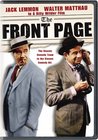
The Front Page (1974)


Cast: Jack Lemmon (Hildy Johnson), Walter Matthau (Walter Burns), Susan Sarandon (Peggy Grant), Vincent Gardenia ('Honest' Pete Hartman), Harold Gould (Mayor Herbie), Austin Pendleton (Earl Williams- the guilty, but insane), and Carol Burnett (Mollie Malloy)

Director: Billy Wilder

Genre: Comedy/ Drama

Before Jack Lemmon and Walter Matthau were playing “Grumpy Old Men”, they were playing rough-as-nails journalists who kept on top of the big news despite the important things of life. They both were so natural for a film like this. The pace of the film was as hard and tough as the journalists themselves. The tension and emotions of the press office came right out of the screen. The film had a taste of Neil Simon perhaps due to the fact that both are often seen in his films. Lemmon and Matthau were perfect for the roles. The two, like all the other movies they did together, played so well off of each other. Matthau especially played the perfect, model reporter who was as gruff and hardcore as any serious news story a reporter like him could cover. The role suited him to the cuff! Lemmon was entertaining to watch and played more off of Matthau that he could have actually been a real reporter as well. With Lemmon, it was fitting that he played the retiring reporter. Susan Sarandon played a wonderful girlfriend to “retiring” Lemmon and, even most enjoyable, was Carol Burnett who played the ill-reputed Mollie Malloy. Hildy Johnson is the best reporter for the Chicago newspaper, the Examiner, during the roaring 20’s. He quickly realizes that he would be much happier married and has firmly decided to quit his job and marry his sweetheart, Peggy. This is bad news to his boss Walter Burns. Burns quickly decides to execute his own plans to get Johnson to stay with the paper for just a little while longer and cover the execution of the guilty (but insane) cop-killer, Earl Williams. Johnson refuses but, conveniently for Burns, Williams happens to escape prison at the same time. With this breaking news at hand, and with a snot-nosed, “piss and vinegar” college kid planted to take Johnson’s place, Johnson feels compelled to at least help with the story a bit “to do Burn’s a favor.” Nobody knows what is going to happen next as events unpredictably go in all directions- the Neil Simon feel. The film is a brilliant comedy and can be called nothing but a classic. Besides the superb casting, the dialogue was perfectly timely. It was well scripted so as to be another character. Matthau and Lemmon were so well together that they truly sit among the ranks of genius comedy duos like Laurel and Hardy, Abbott and Costello, Martin and Lewis. This was not a silly sort of comedy but a matter-of-fact comedy that can only laughed at from an outside perspective. If the characters where looking at the situation from the audience perspective, they would be laughing to. This was the third adaptation of the play. All the sharp profanities set this film apart from the others. They came directly from the play and whether profinity bothers you or not, well...they're playing journalists after all. Atleast playing writers, the characters know how to use them.

Friday, October 20, 2006

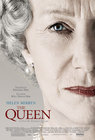
The Queen (2006)

Cast: Helen Mirren (HM Queen Elizabeth II), Michael Sheen (Tony Blair), James Cromwell (Prince Philip), Alex Jennings (Prince Charles)

Director: Stephen Frears

Genre: Biography/ Drama


I was never much into the politics of the Royal Family, nor interested in the doings and ramblings of Princess Diana. U.S. politics are enough of a burden and a headache. Why should I get concerned what those “Brits” are doing across the Atlantic. Still, I became eager to see this film as soon as I heard about its release. When I finally saw it- luckily it was playing close by to me as this movie was only showing in selected theaters- I was not disappointed. The acting and cinematography were outstanding. The casting was just as great. The "Royal" politics depicted were very interesting and even more so was how various characters alluded to the conspiracy regarding the Royal family's involvement in Diana's death. The movie revolves around the Royal family's reaction or apparent lack thereof- particularly on the part of Queen Elizabeth- to the Princess Diana’s death in 1997. Tony Blair had just been elected the British Prime Minister and his first task is an unexpected one. The Princess is killed in a motor caravan, which had been flocked by paparazzi. He has to console a Britain that is both grieving a loss and angry at their Queen for remaining silent towards the whole situation. He tries as best he can to get the Queen to make a public statement showing her sympathy. The Queen on the other hand claims the best way to deal with the princess’s death is with silent mourning and dignity. She claims such as the wishes of Diana's family. The Queen's refusal to make a public appearance seems based mainly on her resentment of the Princess. She falls into a sort of "tug-o-war" with Blair on one side hoping for a statement and her own family and best interests for her grandkids on the other side encouraging her to remain silent. All the while, she tries to remain serious and dignified in both the public eye and the eyes of those around her. There is so much truth and mystery in this whole story. As far as I know, this film is quite accurate with regards to the situations presented. It seems that it wasn't acceptable that Princess Diana was involved with the Muslim millionaire Dodi Al- Fayed. The possibility that she could have married him and become pregnant with his children- heirs to the throne- was completely deplorable for the Windsor family. That Muslim children could have claims to the throne through their mother was intolerable and for good reason, too. Hence, the speculation arises that the Royal Family was involved with Diana's death. In the film, the Queen makes the claim more than once that Diana was “no longer a member of the royal family”. It never did make sense how paparazzi could cause such a fatal car crash in a tunnel. However, this is the story that was presented to the media. In the film, various subtle allusions are made regarding the Royal Family's involvement but it is left up to the audiences to decide. There is just one question that came to me at the end of the picture. What did the Queen herself think of this movie? Was she amused at all? All in all, excellent film!

Friday, October 06, 2006

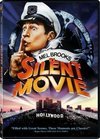
Silent Movie (1976)

Cast: Mel Brooks (Mel Funn), Dom DeLuise (Dom Bell), Marty Feldman (Marty Eggs), Sid Caesar (Studio Chief)

Director: Mel Brooks

Genre: Comedy/ Slapstick


I don’t think there is any genre of movie that Mel Brooks has not slapped around and put in its place. He made fun of Westerns with Blazing Saddles, took shots at classic horror with Young Frankenstein, he went from light speed to “ludicrous speed” in the film Spaceballs taking on the haughtiness of the “ultimate” sci-fi film. He even took on what I call “60’s Bible flicks” with his History of the World, Part 1” and kicked those in the pants. He left no stone unturned, no matter how old a stone, with Silent Movie.
To think that people can be staunchly against bringing back old school filming methods, thinking them to be outdated and no good, are definitely brought to their knees by this film. The title states exactly what the film is- a silent movie. This was the first silent movie to be filmed since movies went to sound 40 years ago. The story line is simple but the acting and improvisation speaks wonders. Mel Funn, Dom Bell, and Marty Eggs have a movie script that's destined to be a huge success. The film is to be a silent movie and the key to its success is not only its silence, but its huge cast of big-name movie stars. The big-wig movie producer, played by Sid Caeser, doesn't like the idea at first but when he hears its cast of big name hotshots, he agrees the film will be a big success and bring in enough money to save his studio from falling into the hands of the studio creditors, Engulf and Devour. So Funn, Bell, and Eggs set off to search for the stars. Marty Feldman is the funniest of the three. His goofy looks, which he is famous for, adds so much humor to the film. Who needs sound when you have so much more that can only work when dialogue doesn't get in the way. The best scene was of course Funn's fall off the sober band wagon to briefly become the ''Lord of the winos". The cast of celebrities is very entertaining. This is a great movie to watch with others. In typical Brooks fashion, the film does contain a few scenes with lewd humor and content. Otherwise, what makes it great is that you can talk during the movie and not worry about missing an important line. The film only has one word of dialogue spoken by a very unlikely source.

Monday, October 02, 2006

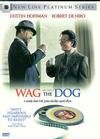
Wag the Dog (1997)

Cast: Robert DeNiro (Conrad Bean), Dustin Hoffman (Stanley Motss), Ann Heche (Winifred Ames)

Director: Barry Levinson

Genre: Political Satire


Political movies are always the hardest to show the public with the expectation that the film will receive a decent amount of attention. I often think that political movies have a limited audience even though their writers are probably aiming for everyone as an audience. Wag the Dog is about the only political film I can think of that has received a deserved amount of attention (JFK doesn’t count). Of course, it had a lot of indirect help from the Clinton administration even though it had nothing to do with Clinton. What makes this film stand out, other than similarities between the scandal of the fictional president of the movie and the Monica Lewinski scandal of Bill Clinton, is the thought the movie leaves the audience at the end. If one part of the story can actually happen, as Mr. Clinton proved to us, then what about the other half? I can't imagine anyone reading this blog passage, whether they're politically oriented or not, not ever hearing about this movie. There are only eleven more days until the Presidential election and the President has been caught with his pants down-literally. He has been accused of sexual misbehavior with a teenage girl in the oval office. A top presidential advisor contacts a Hollywood producer to help create a fake war between the U.S. and Albania in order to distract voters through the media in order that the President can appear heroic than horny and win the election. The director and presidential advisors go all out and cover all bases in order to get the public eye off the President's picadillos and focus on his heroic achievements in the phony war. A handful of Presidential advisors and one Hollywood director take the entire U.S. for a ride.
The whole film gave new meaning to the words "conspiracy theory". I really liked the attention it gave to the purpose of media. Not only was it timely with Clinton’s scandal, but it showed just how much the media fuels the public, who in return, fuel the media. The portrayal of media influence is straight forward, scary, and drives the movie’s audiences to anger. (Here I recommend the book MultiMedia Unlimited by Todd Gitlin- a Journalism Professor at Columbia University). Aside from a few rough words, this film is highly recommended, especially for the political science student.

Saturday, September 23, 2006

To Be or Not To Be (1983)


Cast: Mel Brooks (Dr. Frederick Bronski), Anne Bancroft (Anna Bronksi), Tim Matheson (Lt. Andre Sobinski), Charles Durning (Col. Erhardt)

Director: Alan Johnson

Genre: War/ Comedy


I am definitely not a fan of Mel Brooks. His humor is so raunchy, he gives bad name. Even Groucho Marx once said “Be clean and make people laugh, that’s a comedian.” However, after watching a part of Mel Brooks’ film To Be or Not To Be some months ago I enjoyed what little I saw and decided to watch the whole thing. I thought this film would be an exception to my Brooks movie bias. For one reason, it was based on Ernst Lubitsch’s 1942 classic. For another reason, Brooks’ late wife (my favorite actress) Anne Bancroft stared as his character’s wife. “Surely”, thought I, “he wouldn’t get gutter-dirty in the presence of his wife”. Whether this was the reason he kept the humor clean -for the most part- I don’t know. Nevertheless, it was a safe picture to watch when compared to his previous films. Brooks plays Frederick Bronski, a bad polish actor, who is merely minding his own business trying to make a living when World War II steps in and ruins everything. The Nazis make their way into Poland and, to top his troubles, his wife Anna has been fooling around with a young polish officer, Lt. Andre Sobinski (Tim Matheson), each time her husband is on stage performing Shakespeare’s Hamlet. When Sobinski is introduced to Prof. Siletski (Jose Ferrer), whom he rightly suspects to be working for the Nazis, he flies to England and reports to his superiors that during the Professor’s visit, he and other officers gave him the names and addresses of underground rebels- thinking the Prof. was on their side. A plan develops, involving Bronski and his wife, to retrieve those names and but it turns out to be a greater task than everyone thought. My main objection to the film was the character Sasha, Bronski’s servant. He is an obvious homosexual whose jokes take away the decency of the film. It was a rather tasteless act and was clearly used for the sake of arousing sympathy for homosexuals. If it wasn’t for him, the film would have been more enjoyable. One of the opening acts in the beginning of the film, “Naughty Nazis” (don’t let the term “naughty” frighten you) was extremely funny. Seeing Nazi officers do a short kick-line on stage with Mel Brooks dressed like Hitler singing how he only wants “peace” (i.e. a piece of Poland, a piece of France, etc…) was absolutely brilliant. It reminisces "Springtime for Hitler" in the Brooks' film The Producers. Such humor is typical of Brooks and was completely hysterical. I must give him credit for that! The most enjoyable character was Col. Erhardt (Charles Durning), the head of Gestapo. His German accent and fumbling “Nazi-isms” were amusing to watch.
Christopher Lloyd played a kiss-ass Gestapo officer who knew absolutely nothing other than his orders! To top all this off, the late and great Anne Bancroft was so brilliant and funny, fitting her role so well, that she had an Oscar Nomination for this film. I really liked her in this film. Though this is not what I would call a family film, I think the only people who would enjoy it are spoof fans and those who like to see history get kicked around somewhat. I give this one

Monday, September 18, 2006

On the Waterfront (1954)


Cast: Marlon Brando (Terry Malloy), Lee J. Cobb (Johnny Friendly), Karl Malden (Father Berry)

Director: Elia Kazan

Genre: Crime/ Drama/ Romance


It’s rare to find a film these days in which the realism is real. Marlon Brando is the only actor I’ve seen who has easily pulled off this feat on more than one occasion. On the Waterfront is just one example. Brando was such a natural at acting that he rarely, if ever, memorized his lines. Even while he was playing Vito Corleone in The Godfather, he had his lines posted over head, off camera and read them as they shot his scenes. That’s a natural talent, for sure. Marlon Brando’s unique gift is perfectly evident in this film. Ex-prize fighter, Terry Malloy, wishes he was still doing what he always loved to do-fight. In the mean time, he keeps himself busy tending his homing pigeons and running errands at the docks for Johnny Friendly- the shady boss of the Dock Workers Union. His life takes a raw turn when he witnesses the murder of Joey Doyle by two of Friendly’s henchmen. Keeping this secret to himself despite the sting of his conscience, he meets Joey’s sister Edie. This meeting rattles his conscience even more but doesn’t keep him from taken an interest in her. She introduces him to a priest, Fr. Barry, who is adamant in stopping the shady activities on the waterfront docks despite his own safety. Edie falls in love with Terry which, along with the influence of Fr. Barry, ultimately leads to the biggest act of Terry’s life. This movie is the epitome of classic film. The supporting cast of Lee J. Cobb as Johnny Friendly and Karl Malden work perfectly with each other. The shots of New York City are absolutely brilliant and the dialogue is well done- “I coulda been a contender.”
I’m willing to bet money that when Marlon Brando played Don Vito Corleone in the The Godfather, he thought back to his role as Terry Malloy as I saw a few minor similarities between the two characters. I certainly recommend this film. I suppose it could be loosely fall into the genre of sports films as the boxing plays an important element. Still, the movie really centers around Terry Malloy. Hollywood does not make them like this anymore. Brando is magnificent, realistic, and brilliant. The supporting actors are well cast and blend together nicely in this film.